Blog
Home & Decor Awards 2026: How to find the right art for your space


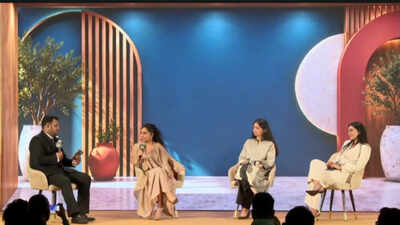
Choosing art for a home can seem deceptively simple: find a piece you love, find a wall and put it up. But as a panel at the TOI Home & Decor Awards 2026 in New Delhi explored, the relationship between art and interiors is far more nuanced. During the discussion, Aarna Jai Madaan, Founder, Siddhi Arts; Mansi Trehan, Director – Design and Senior Architect, Planners Group Pvt. Ltd.; and Smita Tiwari, Founder, Articlad, examined how art can influence the character, energy and experience of a space.
When art becomes part of a space
For the panelists, art is not simply an object purchased for its visual appeal. Its relationship with the room, its surroundings and the person experiencing it matters just as much.“Art, honestly, we often look at art as an object, not as a part of space,” said Mansi Trehan. “But I think it’s something that is more intentional. It is something that makes more sense. And it is something that really belongs there.”That sense of belonging can come from material, scale, lighting, placement or even the emotion a work evokes.For Aarna Jai Madaan, art also carries an emotional and cultural dimension. With a background in psychology and a focus on Vastu-compliant artefacts at Siddhi Arts, she views objects as reminders that can influence how people feel and behave.“I feel every object is a reminder. As soon as we cross it, it causes a cue of feeling in us,” Madaan explained.Her interest in this connection was influenced by India’s architectural and spiritual traditions, including the use of sculptures such as the yali, traditionally placed at temple entrances as symbolic guardians. She began exploring how such historical ideas could be adapted for contemporary homes.
Designing around the artwork
The conversation also challenged the idea that art should always be added after an interior is complete. Sometimes, the artwork can become the starting point for an entire design.“I feel sometimes art can be the strongest element in the room. And design can be around it,” said Smita Tiwari. “And maybe the other time, design can itself be a statement, and art should just complement it.”The distinction becomes particularly important when dealing with large works or sculptural pieces that require breathing room. Some artworks demand a wall of their own, while others can become part of a gallery-style composition.Tiwari offered a simple philosophy for homeowners navigating the process: “Let you decide the why. And let the designer decide the where.”
From concrete to sculptural art
The panel also broadened the definition of what can constitute art. Trehan pointed to concrete, a material more commonly associated with construction than luxury interiors, as an example of how design can transform perception.“We do a lot of sculptural tables and furniture,” she said, describing combinations of concrete, wood and upholstery that turn functional objects into sculptural elements.For her, context is critical. “It is about the design around it. It’s about the space. It’s about the lighting. It’s about the execution.”
Technology meets the personal
Technology has also expanded how art is created, viewed and integrated into interiors. Digital art, AI and lighting technologies can create new ways of presenting and experiencing creative work.Yet the panelists emphasised that technology does not necessarily replace the emotional quality of physical art.“Art is something which is more personal,” Trehan said. “The same place, the same room can be experienced very differently by different people.”Madaan, representing a younger generation of creators, sees technology as a tool that can deepen that connection, particularly by making historical and cultural knowledge more accessible.Ultimately, the panel returned to a simple idea: choosing art for a home is less about following a formula and more about understanding why a piece resonates. Once that connection is established, the right space, scale and placement can allow the artwork to become part of the home’s identity.